

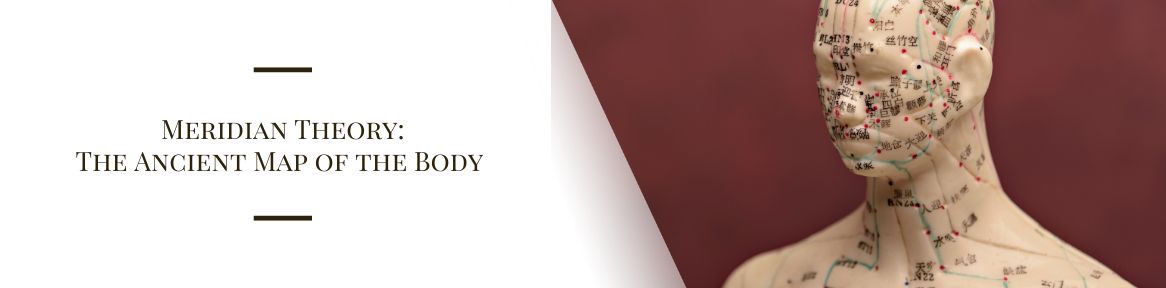
For thousands of years, practitioners of Traditional Chinese Medicine (TCM) have described the human body using a very different “anatomy” than modern Western medicine. Instead of viewing the body only through nerves, vessels, and organs, they described an interconnected communication system linking structure, function, sensation, and emotion.
This network is called the meridian system. Today, with growing interest in acupuncture, fascia research, bioelectric signaling, and integrative medicine, Meridian Theory is once again being explored through a scientific lens. Researchers continue to ask: are meridians symbolic, or do they reflect real physiological networks?
What Is Meridian Theory?
Meridian Theory proposes that the body contains channels through which qi (vital functional energy) flows. These pathways connect the surface of the body to internal organ systems and help maintain physiological balance.
In classical TCM:
- The body contains a hierarchical network of meridians, collaterals, and sub-channels.
- Each meridian corresponds to an organ system.
- Disease arises when energy flow becomes blocked or imbalanced.
- Treatments restore circulation and balance.
Acupuncture, acupressure, cupping, and moxibustion all operate through this framework.
Modern clinical explanations often translate this concept as functional regulation rather than literal energy. For example, stimulating points along meridians is believed to improve circulation, reduce inflammation, and regulate the nervous system.
Historical Origins
Meridian Theory originates from The Yellow Emperor’s Classic of Internal Medicine (Huangdi Neijing), written more than 2,000 years ago. The text describes:
- 12 primary meridians
- 8 extraordinary vessels
- Hundreds of acupuncture points
Ancient physicians relied on observation such as pain patterns, sensitivity, temperature changes, and organ relationships—rather than dissection. In modern terms, they were mapping physiological relationships, not anatomical structures.
The Functional Logic of Meridians
Meridians are less like pipes and more like regulatory circuits. Each meridian governs:
| Meridian | Functional Domain |
|---|---|
| Lung | Immunity & respiration |
| Spleen | Digestion & metabolism |
| Liver | Regulation & tension |
| Heart | Circulation & emotional state |
| Kidney | Growth & repair |
| Stomach | Nutrient absorption |
A point on the lower leg influencing digestion may seem unusual anatomically, but clinically it reflects the idea of system-wide communication, not local isolation.
Modern physiology now recognizes that the body regulates itself through distributed systems—fascia, neurochemical signaling, and reflex pathways that connect distant regions.
How Acupuncture Uses Meridians
Acupuncture points lie along meridians and are stimulated by needles, pressure, heat, electrical stimulation, and light therapy (photobiomodulation).
There are more than 2,000 known acupuncture points. The goal is not simply local treatment but system regulation. Modern research shows acupuncture may stimulate nerves, increase blood flow, release endorphins, regulate inflammation. These effects align surprisingly well with ancient descriptions of “restoring qi flow.”
Modern Scientific Investigations
For centuries, critics argued meridians were purely metaphorical. But recent interdisciplinary research suggests they may correspond to real biological systems just not organs in the Western sense.
Fascia Network Hypothesis
One of the strongest theories links meridians to the body’s connective tissue matrix.
Researchers found:
- Acupuncture points correspond to connective tissue planes.
- Meridians may follow fascial pathways.
- They may form part of the extracellular matrix.
Fascia is a continuous web surrounding muscles, organs, and nerves. It transmits tension, vibration, and signaling throughout the body, much like a communication network. This explains why stimulating one point affects distant regions.
Electrical Properties
Studies measuring electrical impedances found acupuncture points differ from surrounding tissue:
- Lower electrical resistance
- Higher capacitance
Some researchers propose meridians represent bioelectrical communication pathways rather than anatomical tubes.
Interstitial Fluid & Signaling Pathways
Imaging studies suggest long-distance fluid channels may exist along connective tissue guiding biochemical signals. This aligns closely with ancient descriptions of energy circulation, replacing “qi” with information flow.
Nervous System Integration
Another theory suggests meridians integrate nervous signaling and chemical mediators. Acupuncture analgesia models show neurotransmitter regulation, including endorphins. This helps explain why a point on the hand can affect headache pain.
Why Meridian Theory Works Clinically
Modern medicine typically treats isolated structures like joints, muscles, organs, and nerves. Meridian Theory treats functional networks. Many chronic conditions are regulatory disorders. These include pain syndromes, stress disorders, digestive dysfunction, inflammation, and hormonal imbalance.
These involve communication breakdowns and not structural damage. Because meridian therapies act systemically, they can influence nervous system balance, circulation, immune response, and muscle tone. Systematic reviews show acupuncture improves multiple conditions including chronic pain and neurological disorders.
The Debate: Symbol or Structure?
The scientific community remains divided. Supportive evidence concludes that there are connective tissue alignment, electrical conductivity differences, and fluid signaling pathways.
Some researchers attribute effects primarily to nerve stimulation in a more skeptical view. The most widely accepted modern view is that meridians are not single anatomical structures but are functional communication networks. They likely represent overlapping systems:
- Fascia
- Nervous system
- Vascular flow
- Bioelectric signaling
Ancient physicians described the function before science discovered the mechanism.
Meridian Theory in Modern Integrative Medicine
Today, Meridian Theory is being applied in pain management, sports medicine, dermatology, stress therapy, and rehabilitation.
Its resurgence parallels a shift toward systems biology; the understanding that the body operates as a network rather than independent parts. Western medicine increasingly recognizes regulatory medicine including:
- Neuroimmune signaling
- Gut-brain axis
- Myofascial chains
These ideas strongly resemble the meridian framework but using modern terminology.
Bridging Ancient Wisdom and Modern Science
The most important takeaway is not whether qi is literal energy. Instead, meridian theory may be an early physiological model describing regulation rather than anatomy. Ancient physicians lacked microscopes, but they observed patterns accurately enough that modern science is now finding physical correlations. They mapped functions. Science is discovering structure.
Meridian theory represents one of the oldest attempts to understand the body as an integrated system. While originally expressed in energetic language, modern research suggests these pathways may correspond to networks of fascia, fluid signaling, electrical conductivity, and neurochemical regulation.
Rather than mystical, the meridian model may be proto-systems biology; a conceptual map describing how distant parts of the body communicate. Today, acupuncture and related therapies continue to demonstrate measurable physiological effects. The growing convergence between traditional theory and modern science suggests the meridian system may not replace anatomy but complement it.
In other words, western medicine explains what the body is. Meridian theory explains how the body behaves. And increasingly, both perspectives appear to describe the same reality from different starting points.
In modern integrative practice, these principles are not just theoretical—they are applied in clinical acupuncture settings that focus on nervous system regulation and whole-body balance.
Ageless Acupuncture in Mount Pleasant, South Carolina, applies this systems-based approach in personalized treatments designed to support the body’s natural healing processes.
Rather than treating isolated symptoms, care is focused on how interconnected systems like fascia, circulation, and nervous regulation influence overall health.
Patients commonly seek support for:
- Chronic pain and muscle tension
- Stress and emotional overload
- Sleep disturbances and fatigue
- Digestive and hormonal imbalance
Each treatment is tailored to the individual’s patterns of imbalance, with the goal of restoring functional harmony over time.