
Carpal Tunnel Syndrome: A Natural Approach with Acupuncture in SC
Do you feel tingling or numbness in your hand or fingers? Pain that travels from your wrist up your arm? Maybe holding small objects has become harder. These are common sights of Carpal Tunnel Syndrome, a condition where the median nerve in the wrist gets compressed and causes discomfort that can impact your daily life.
Carpal tunnel is common and millions of adults experience it and while conventional medicine often uses wrist splints, medications, or even surgery, many people want safe, natural options too. That’s where acupuncture and Traditional Chinese Medicine (TCM) come in, especially here in South Carolina (acupuncture in Charleston) where many patients are finding relief without drugs or invasive procedures.
Understanding CTS Simply
The carpal tunnel is a narrow passage in your wrist that houses the median nerve, which gives feeling to your thumb and first three fingers and helps you grasp things. When swelling from repetitive use or injury presses on that nerve, you get symptoms like:
- Numbness, tingling, or burning in your fingers
- Pain in the wrist that may extend up the arm
- Weakness or dropping objects easily
Repetitive tasks involving wrist movement (like typing, texting, or assembly line work) are common triggers (Glazer & Pantea, 2019).
How Acupuncture Can Help
Patients often ask: “Can acupuncture really do something for CTS?” The research is growing, and while we always want the highest-level evidence, here’s what current science shows:
- Acupuncture may reduce pain and improve nerve functions
Some studies find that acupuncture plus a wrist splint helped clinical symptoms and nerve function more than splints alone. In one clinical trial, people receiving acupuncture showed decreases in pain scores and improvements in how the nerve looked on ultrasound after treatment.
- Research suggests acupuncture compares favorably to standard treatments
A 2015 trial reported that acupuncture reduced pain and improved symptom questionnaires more than ibuprofen in people with mild to moderate CTS.
- Systematic reviews support acupuncture as an option especially with other care
What You Can Do Every Day
Alongside professional acupuncture care, simple lifestyle changes make a real difference:
- Taking breaks from repetitive work even short pauses help.
- Stretch your hands, wrists, and shoulders gently throughout the day
- Check your workstation setup, proper ergonomics can reduce strain
- Stay active, practices like gentle yoga or physical therapy support flexibility
- Ask about supplements (like B vitamins and omega-3s) that may support nerve health.
These natural approaches empower you to take an active role in your healing journey.
Recent meta-analyses indicate that acupuncture can be effective when used alongside conventional treatments like night splint, and may offer greater pain relief than night splinting alone in some cases (Dong et al., 2023).
While the quality of research varies, these results suggest acupuncture has potential benefit for CTS symptoms without the side effects often associated with medications or surgery.
What to Expect & Bottom Line
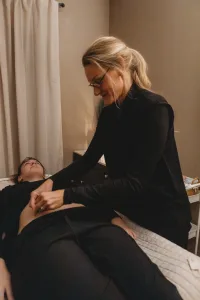
When you receive acupuncture from a licensed practitioner in South Carolina, your care is always personalized. During treatment, fine and sterile needles are gently placed at specific points to support your body’s natural healing response, reduce inflammation, and improve nerve communication. Many patients also notice that acupuncture helps calm the nervous system, making it easier to cope with the stress that often comes with chronic pain.
Carpal Tunnel Syndrome doesn’t have to control your life. Acupuncture offers a safe, drug-free option that many people find helpful especially when paired with healthy lifestyle habits and supportive care. If you’re exploring acupuncture for carpal tunnel in SC, a consultation with a licensed acupuncturist at Ageless Acupuncture can help determine whether this natural approach aligns with your goals.
References:
- Dong, Q., Li, X., Yuan, P., Chen, G., Li, J., Deng, J., Wu, F., Yang, Y., Fu, H., & Jin, R. (2023b). Acupuncture for carpal tunnel syndrome: A systematic review and meta-analysis of randomized controlled trials. Frontiers in Neuroscience, 17, 1097455. https://doi.org/10.3389/fnins.2023.1097455
- Hadianfard, M., Bazrafshan, E., Momeninejad, H., & Jahani, N. (2015). Efficacies of Acupuncture and Anti-inflammatory Treatment for Carpal Tunnel Syndrome. Journal of Acupuncture and Meridian Studies, 8(5), 229–235. https://doi.org/10.1016/j.jams.2014.11.005
- Ural, F. G., & Öztürk, G. T. (2017). The Acupuncture Effect on Median Nerve Morphology in Patients with Carpal Tunnel Syndrome: An Ultrasonographic Study. Evidence-based complementary and alternative medicine : eCAM, 2017, 7420648. https://doi.org/10.1155/2017/7420648