Healing does not always begin where the pain lives.
For many people, recovery starts in a quieter place, the scalp. While often overlooked, the scalp holds direct connections to the brain, making it a powerful access point for neurological healing, chronic pain relief, and emotional regulation.
At Ageless Acupuncture, scalp acupuncture is used to gently support the brain’s ability to heal, adapt, and reconnect with the body. This approach is especially helpful for patients navigating neurological conditions, ongoing pain, or nervous imbalance.
What is Scalp Acupuncture?
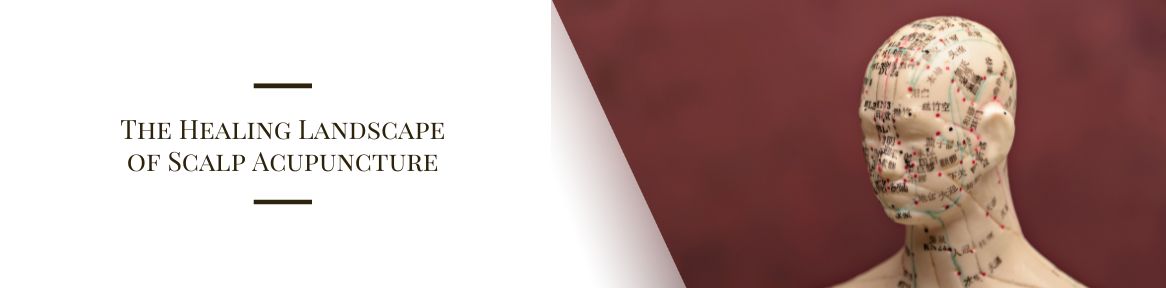
Scalp Acupuncture is a modern style of acupuncture commonly used for neurological recovery, stroke rehabilitation, chronic pain, and anxiety support. It combines principles of Traditional Chinese Medicine with current understanding of brain function.
Specific areas of the scalp correspond to regions of the brain responsible for movement, sensation, speech, and emotional processing. By gently stimulating these areas, scalp acupuncture helps improve communication between the brain and the body, encouraging function, coordination, and balance.
How Scalp Acupuncture Supports the Brain
Scalp acupuncture works by supporting neuroplasticity, the brain’s ability to reorganize and form new neural pathways.
Research shows that stimulating scalp regions can:
- Increase cerebral blood flow
- Improve nerve signaling
- Reduce inflammation
- Support motor and sensory recovery
Clinical studies have found that scalp acupuncture, when combined with rehabilitation, significantly improves motor function after stroke compared to rehabilitation alone (Shah et al., 2013). Other research suggests benefits for pain modulation and emotional regulation by influencing brain signaling pathways (Zhang et al., 2024; Lu et al., 2025).
In practice, this means the brain becomes more responsive to healing and retraining.
Conditions Scalp Acupuncture May Support
Scalp acupuncture is often used to support:
- Stroke recovery and impaired movement
- Parkinson’s disease and tremors
- Multiple sclerosis
- Chronic pain and neuropathy
- Post-concussion symptoms
- Anxiety, depression, and emotional stress
- Speech difficulties and aphasia
It is especially effective when paired with physical therapy, speech therapy, or other rehabilitation approaches.
What to Expect During a Scalp Acupuncture Session
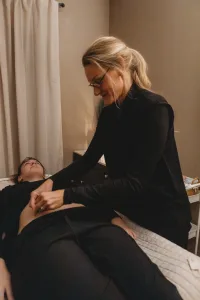
Scalp acupuncture is typically very gentle.
Thin needles are placed shallowly along the scalp. Most patients report:
- Light tingling or warmth
- A sense of calm or mental clarity
- Feeling relaxed yet alert
In some sessions, gentle movement or exercises may be performed while the needles are in place to help reinforce new brain-body connections.
Supporting More Than the Physical Body
Neurological and chronic conditions often affect identity as much as mobility.
The movement supports independence.
Speech supports connection.
Balance supports confidence.
By calming and regulating the nervous system, scalp acupuncture helps patients reconnect with their bodies in a way that feels steady, supported, and hopeful.
Scalp Acupuncture at Ageless Acupuncture
Scalp acupuncture reflects the meeting of ancient healing wisdom and modern neurological science. Whether supporting recovery after injury, easing chronic pain, or helping regulate stress and anxiety, it offers the brain a chance to relearn and restore.
If you are seeking Charleston acupuncture focused on neurological support, pain relief, and whole-person care, Ageless Acupuncture is here to support your healing journey.
Schedule your consultation today and discover how scalp acupuncture can support your path toward balance and recovery.
References:
- Lu, H.-y., Wang, B.-j., Ma, C., Liu, A.-g., & Yan, X.-k. (2025). Neuroplasticicity mechanism of acupuncture for pain-induced emotions: From function to structure. World Journal of Acupuncture-Moxibustion, 35(4), 276–282. https://doi.org/10.1016/j.wjam.2025.07.003
- Shah, S. H., Lee, J.‑H., & Kim, J. (2013). Scalp acupuncture for stroke recovery: A systematic review and meta‑analysis of randomized controlled trials. Journal of the Neurological Sciences, 333(1–2), 1–9. https://doi.org/10.1016/j.eujim.2012.10.006
- Zhang, B. L., Liu, J., Cui, F. Y., Cao, J., Yu, S. Y., Kong, Q., & Kong, J. (2024). Scalp acupuncture targets for neurological disorders:evidence from neuroimaging studies (part 1). 基于神经影像学的常见神经系统疾病头针刺激靶点研究(上). Zhen ci yan jiu = Acupuncture research, 49(6), 650–660. https://pubmed.ncbi.nlm.nih.gov/38897810/