
Japanese and Chinese acupuncture both came from the same classical East Asian medical roots. Over centuries, however, they evolved into distinct clinical styles. Japanese acupuncture is known for being gentle and highly tactile, while Chinese acupuncture, often referred to as Traditional Chinese Medicine (TCM), tends to emphasize stronger needle sensations and more standardized treatment protocols. Neither approach is “better”. The right fit depends on your sensitivity, condition, and personal wellness goals.
Key Differences Between Japanese and Chinese Acupuncture
There are a few key ways each technique is different so let’s dive into the specifics so you can better grasp which one might be the right fit for you.
Needle Design & How They Feel
Japanese acupuncture typically uses extremely fine needles, often measuring 0.16-0.18 mm in diameter, inserted shallowly with the help of a guide tube. This method was popularized in the 17th century by Waichi Sugiyama and is designed to make treatments precise, comfortable, and accessible for sensitive or first-time patients. Research shows that even with shallow insertion, Japanese-style acupuncture produces measurable therapeutic sensations while remaining gentle on the nervous system (Nishiwaki et al., 2018; Kobayashi et al., 2007).
Chinese TCM acupuncture often uses deeper insertion and firmer stimulation to elicit deqi, a sensation commonly described as tingling, heaviness, warmth, or mild aching. While both styles adjust intensity based on the individual, Japanese methods generally favor lighter stimulation, whereas TCM approaches may feel stronger and more pronounced (Vickers et al., 2012).
Diagnosis and Treatment Focus
Japanese acupuncture style often:
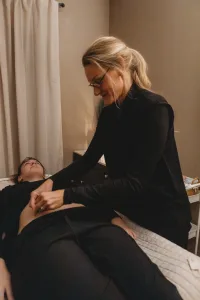
- Relies heavily on palpation, especially of the abdomen (hara) and meridian channels
- Focuses on correcting root imbalances first, then addressing local symptoms
- Adjusts points during the session based on immediate feedback from the body
Chinese TCM style often:
- Uses syndrome differentiation frameworks such as Liver qi stagnation or Spleen qi deficiency
- Incorporates pulse, tongue, and symptom assessment
- Includes adjunct therapies like electroacupuncture, cupping, or moxibustion when appropriate
Special Techniques & Pediatric Care
Both Japanese and Chinese traditions use moxibustion, a therapy that warms acupuncture points with mugwort. Japanese acupuncture often applies very small, precise amounts for gentle, localized heat.
Japan also developed shonishin, a non-insertive pediatric technique that uses gentle tapping, stroking, or pressing tools on the skin. This approach is especially helpful for children, sensitive adults, or anyone who is needle-averse (Kobayashi et al., 2007).
What the Research Says
Acupuncture research has expanded significantly over the past two decades. Although studies rarely separate outcomes by Japanese versus Chinese styles, high-quality evidence shows that acupuncture provides meaningful benefits for several conditions.
Chronic pain in general. Large reviews and clinical trials demonstrate that acupuncture is more effective than sham treatment or usual care for chronic pain conditions such as back pain, neck pain, headaches, shoulder pain, and osteoarthritis. These improvements, while often moderate on average, are statistically significant and clinically meaningful for many patients (Vickers et al., 2012).
Low back pain. Recent systematic reviews and meta-analyses support acupuncture as a safe, non-drug option for chronic low back pain, with improvements in pain and function when combined with usual medical care (E. Yang et al., 2024).
Osteoarthritis knee pain, neck pain, and postoperative pain. The U.S. National Center for Complementary and Integrative Health (NCCIH) notes supportive evidence that acupuncture may help back or neck pain, knee osteoarthritis, and postoperative pain, and may reduce aromatase-inhibitor joint pain in people with breast cancer. NCCIH also cites potential benefits for tension-type headaches and migraine prevention.
How acupuncture works: Physiological research suggests acupuncture influences the nervous system, modulates pain signaling, and affects autonomic regulation, helping explain why both gentle and stronger techniques can be effective depending on the individual (Nishiwaki et al., 2018; Vickers et al., 2012).
What to expect: Most patients experience small-to-moderate improvements that can last over time. Some experience more substantial relief. As with most chronic conditions, acupuncture tends to work best as part of a multi-modal plan that includes movement, stress management, sleep support, and appropriate medical care.
Which Style Might Be Best for You?
Japanese acupuncture may be a good fit if:
- You are sensitive, anxious, or new to acupuncture
- You have digestive, autonomic, or functional concerns where palpation guides treatment
- You are a child or needle-averse and benefit from non-insertive techniques like shonishin
Chinese TCM acupuncture may be a good fit if:
- You prefer or tolerate stronger needle sensations
- Your condition responds well to standardized treatment protocols
- Adjunct therapies such as cupping or electroacupuncture are indicated
Many modern practitioners blend both approaches. In practice, the acupuncturist’s training, experience, and ability to tailor care to your body often matter more than the specific style name.
Practical Patient Tips
- Ask about training and approach. If you’re needle-sensitive, ask about Japanese-style techniques. If you prefer stronger stimulation, communicate that too
- Set realistic goals: Treatment plans often involve 6–12 sessions, with reassessment along the way.
- Think holistically: Acupuncture works best when paired with movement, stress regulation, good sleep habits, and supportive medical care.
The Takeaway
Japanese and Chinese acupuncture share a common heritage but offer different experiences. Japanese acupuncture emphasizes gentle, shallow needling and tactile diagnosis, while Chinese TCM often uses stronger stimulation and structured protocols. Research supports acupuncture as a safe and effective option for chronic pain and functional conditions, especially when integrated into a comprehensive, individualized care plan.
Ready to experience the benefits of acupuncture?
Schedule your personalized session at Ageless Acupuncture in Charleston today and discover the approach that’s right for your body, sensitivity, and wellness goals.