
Do any of these sound like your life?
- A stubborn knot between your shoulder blades that just won’t ease
- A chronic low-back flare that refuses to leave
- A neck that feels “stuck” after hours at your desk
At Ageless Acupuncture, we often pair acupuncture and cupping because they work on different mechanisms that together can support faster, safer relief.
Acupuncture: Soothing the Nervous System & Rebalancing Pain
Acupuncture engages the body’s pain-modulating pathways including how the brain interprets pain and how the nervous system manages stress and inflammation. Research shows acupuncture is more effective than no treatment and has modest but consistent benefits compared to sham procedures for chronic pain, including back and neck pain, osteoarthritis, and shoulder pain. These effects often go beyond placebo and are seen across thousands of patients in multiple trials (Vickers et al., 2017).
More broadly, evidence maps show acupuncture has favorable effects on musculoskeletal pain and remains a reasonable non-drug treatment option for chronic pain conditions, though more high-quality studies are needed (Ang et al., 2025).
Cupping: Mechanical Decompression & Local Circulation Support
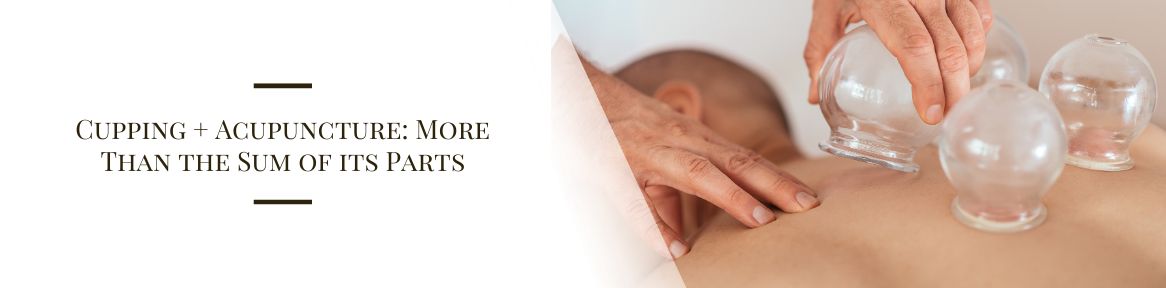
Cupping uses controlled suction to gently lift tissue and increase sensory input in tight or guarded areas. Systematic reviews indicate cupping is associated with short-term reductions in pain intensity in chronic pain contexts, especially musculoskeletal pain like back or neck discomfort. However, outcomes vary, and study quality ranges from low to moderate (L. Wang et al., 2023; Cramer et al., 2020)
This means cupping can be a reasonable non-pharmacological option for people looking for symptom relief especially when paired with movement and nervous system support but like all therapies, it should be tailored to the individual.
Why Pair Acupuncture + Cupping?
In clinical practice, many practitioners and emerging research support combining these techniques for a synergistic effect:
-
Acupuncture first: helps calm the nervous system and reduce threat perception around pain.
-
Cupping second: supports local tissue “un-stiffening” and can make movement feel easier and freer.
Some studies (including randomized trials not in your specific links but in the literature) have found that combining modalities such as dry cupping with acupuncture-style protocols can improve quality of life and patient satisfaction versus acupuncture alone especially for chronic back pain contexts (Cao et al., 2014).
Acupuncture 101
Acupuncture is best studied as a pain-modulating intervention. Large-scale analyses suggest acupuncture performs better than no acupuncture and (by smaller margins) better than sham procedures for several chronic pain conditions.
Some of the most influential evidence comes from the Acupuncture Trialists’ Collaboration’s individual patient data meta-analysis (and later updates), which found acupuncture to be associated with improvements in back/neck pain, osteoarthritis, headaches, and shoulder pain.
Acupuncture is also recognized in mainstream clinical guidance for back pain. For example, the American College of Physicians guideline for non-radicular low back pain includes acupuncture among recommended non-drug options (particularly for chronic low back pain). And newer randomized clinical trial evidence continues to be published, including a large trial in older adults with chronic low back pain reporting improved pain-related disability with acupuncture compared with usual medical care alone.
In plain language: acupuncture tends to be most compelling when the goal is to shift pain processing and restore function, especially in chronic, recurrent, or centrally sensitized pain patterns.
It’s helpful to think of acupuncture and cupping as two different “inputs”:
1) Acupuncture: nervous system + pain modulation
Acupuncture is often framed as influencing:
- Central pain processing (how the brain interprets pain)
- Descending inhibition (the body’s own pain-dampening pathways)
- Local neuroimmune signaling and microcirculation
You don’t have to pick one single mechanism for it to be clinically useful; pain is multi-system, so multi-pathway effects are plausible.
2) Cupping: mechanical decompression + local circulation + tissue glide
Cupping is frequently used like a myofascial decompression technique:
- Negative pressure lifts superficial tissues
- The glide between skin, fascia, and muscle may improve
- Local blood flow and sensory input change in the region
Evidence syntheses for cupping in pain conditions often show short-term pain reduction, with recurring cautions about study heterogeneity and risk of bias.
A concrete example: a randomized trial of pulsatile dry cupping for chronic low back pain reported improvements after several weeks, with some effects persisting at follow-up, though outcomes varied by comparison group.
Acupuncture can reduce threat perception and pain amplification. Cupping can “open up” guarded tissue and make movement feel safer and easier again. When you combine them well, one intervention can make the other “land” more effectively.
What the Research Says About Cupping Alone for Pain
Across reviews, the most consistent signal for cupping is in musculoskeletal pain relief, especially neck pain, back pain, and some chronic pain contexts, often in the short term.
A systematic review on cupping for neck pain found cupping reduced pain compared with no intervention or active controls and could improve function/quality of life, but the authors emphasized the low quality of evidence and need for better trials.
A broader review and meta-analysis of cupping for chronic pain reported that cupping could be superior to no treatment for pain intensity in certain conditions but also stressed limitations such as heterogeneity and methodological concerns.
More recent evidence continues to accumulate (including meta-analyses focused on chronic musculoskeletal pain), again commonly finding pain intensity improvements while noting limitations for disability/function outcomes.
If your target is pain intensity and tissue tenderness, cupping is a reasonable nonpharmacologic option to consider, especially when paired with movement, sleep support, and other fundamentals. The research signal is promising, but not uniformly high quality.
What the Research Says About Acupuncture Alone for Pain
The evidence base for acupuncture in chronic pain is broader and generally stronger than cupping’s, particularly because of large, pooled datasets and guideline inclusion.
- Individual patient data meta-analyses and updates support acupuncture for several chronic pain conditions with effects that exceed sham controls, though the sham difference is often modest.
- Clinical guidelines (e.g., ACP) include acupuncture as a recommended non-drug option for low back pain.
- Large, randomized trials continue to add evidence in specific groups, including older adults with chronic low back pain.
For chronic musculoskeletal pain, acupuncture is one of the more evidence-backed non-drug therapies, especially when the goals include improved function and reduced pain interference with life.
Used Together: Why Clinicians Pair Them
In practice, many clinicians combine acupuncture and cupping in a sequence such as:
- Acupuncture is first to reduce pain sensitivity and downshift the stress response.
- Cupping is second to address local restriction/tenderness and improve tissue glide
- (or the reverse, depending on presentation and patient tolerance).
There are trials specifically evaluating combined approaches. For instance, a randomized trial in adults with chronic back pain found that ear acupuncture combined with dry cupping produced better results in certain quality-of-life perceptions and health satisfaction compared with ear acupuncture alone.
While every patient is different, the acupuncture + cupping combo is commonly most useful when:
Pain has a strong muscle/fascia component: Think: “knots,” trigger points, protective guarding, limited range of motion.
Chronic pain has created a fear-avoidance loop: Acupuncture helps calm the system; cupping offers a non-threatening mechanical input that can make movement feel possible again.
You’re trying to reduce medication reliance: Some broader acupuncture evidence suggests potential roles in pain management pathways that may reduce reliance on medications in certain contexts (though this depends heavily on condition and care plan).
The patient is ready to pair passive care with active rehab: The “win” is often not the cup or needle alone, it’s the window they create for strength, mobility work, better sleep, and stress reduction.
Acupuncture helps change the nervous system’s relationship to pain; cupping helps change the local tissue environment and together they can create a faster, more noticeable shift in comfort and movement than either alone for the right person.
The best outcomes tend to come when:
- Treatment is targeted (right area, right intensity, right dose)
- Progress is measured (pain interference, function, range of motion)
- Care is integrated with movement and self-care habits
Cupping and acupuncture each have their own strengths, and their overlap is exactly why they’re frequently paired. The research base is strongest for acupuncture in chronic pain and steadily growing for cupping in musculoskeletal pain, with early but promising evidence that combining them (e.g., auricular acupuncture + dry cupping) can further improve quality-of-life outcomes for chronic back pain.
At Ageless Acupuncture, our goal is functional relief and better quality of life — not just “band-aid” explanations like detox or folklore. We see acupuncture and cupping as tools that:
- Ease pain signaling in the nervous system
- Reduce protective muscle guarding
- Improve your range of motion and comfort
- Support your ability to move, sleep, and live better
If chronic pain feels like it’s running your life, you don’t have to just “put up with it” forever. Acupuncture + cupping thoughtfully combined and tailored to your body can help shift pain from sharp and guarded → dull and workable → manageable or resolved.
Book a consultation with Ageless Acupuncture today and let us help you find a plan that supports not just pain reduction, but improved movement, rest, and everyday living.
Reach out to schedule your appointment and take the first step toward relief. Because the right care can make life feel easier and we’re here to support that journey.
References:
- Ang, L., Song, E., Choi, T., Jun, J. H., Lee, B., Yim, M. H., Lee, H. W., & Lee, M. S. (2025). Effects of acupuncture on musculoskeletal pain: an evidence map. Frontiers in Medicine, 12, 1575226. https://doi.org/10.3389/fmed.2025.1575226Cao,
- H., Li, X., Yan, X., Wang, N. S., Bensoussan, A., & Liu, J. (2014). Cupping therapy for acute and chronic pain management: a systematic review of randomized clinical trials. Journal of Traditional Chinese Medical Sciences, 1(1), 49–61. https://doi.org/10.1016/j.jtcms.2014.11.003
- Cramer, H., Klose, P., Teut, M., Rotter, G., Ortiz, M., Anheyer, D., Linde, K., & Brinkhaus, B. (2020). Cupping for Patients with Chronic Pain: A Systematic Review and Meta-Analysis. Journal of Pain, 21(9–10), 943–956. https://doi.org/10.1016/j.jpain.2020.01.002
- Vickers, A. J., Vertosick, E. A., Lewith, G., MacPherson, H., Foster, N. E., Sherman, K. J., Irnich, D., Witt, C. M., & Linde, K. (2017). Acupuncture for Chronic Pain: Update of an individual Patient Data Meta-Analysis. Journal of Pain, 19(5), 455–474. https://doi.org/10.1016/j.jpain.2017.11.005
- Wang, L., Cai, Z., Li, X., & Zhu, A. (2023). Efficacy of cupping therapy on pain outcomes: an evidence-mapping study. Frontiers in Neurology, 14, 1266712. https://doi.org/10.3389/fneur.2023.1266712